ALBA Synchrotron

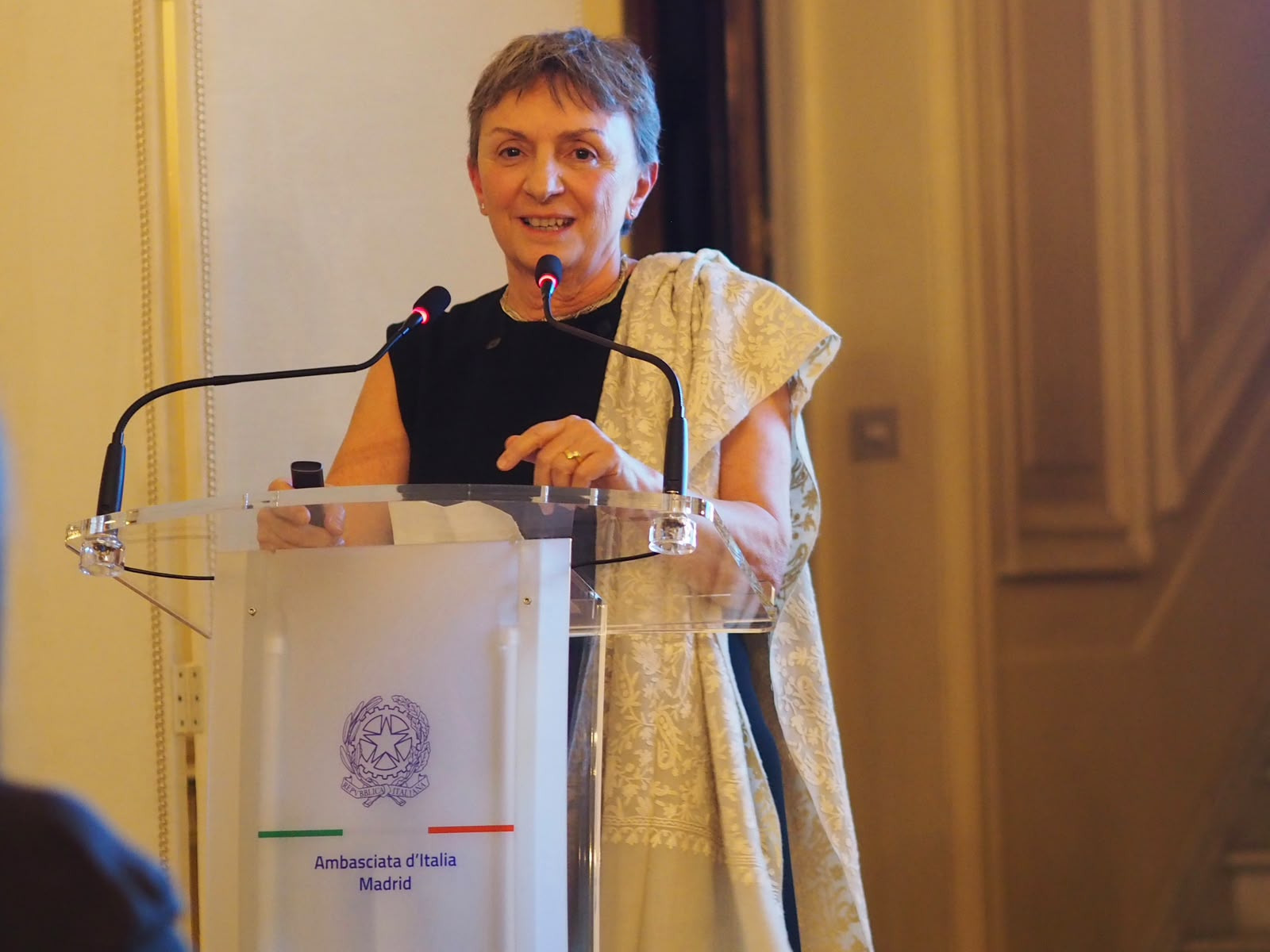
The Director of the ALBA Synchrotron has been recognised for her outstanding scientific career, leadership and contribution to strengthening relations between Italy and Spain.
On Thursday 22 October 2026, Caterina Biscari, Director of the ALBA Synchrotron, received the the Aldo Olcese Award, in its 2nd edition, during a ceremony held at the Italian Embassy in Madrid and hosted by Ambassador Giuseppe Buccino Grimaldi. The Ambassador described it as "an award in memory of an exceptional person, for an exceptional person."
This award honours the memory of Aldo Olcese Santonja (1957–2025), a Spanish entrepreneur and economist of Italian origin who devoted more than three decades to strengthening economic and cultural ties between Italy and Spain. A pioneer in corporate social responsibility, Olcese fostered dialogue and cooperation between the two countries.
Promoted by the Italian Embassy in Madrid under the leadership of Sergio Scopetta – Embassy's scientific attaché –, the award recognises individuals from the scientific, academic, artistic and business communities who combine professional excellence, innovation and a commitment to social impact, while encouraging relations between Italy and Spain.
During the ceremony, Alessandra Patera, researcher at the FAXTOR beamline at ALBA, presented an overview of Biscari's scientific career, from her early work in particle accelerator physics to her leadership of ALBA since 2012. The award consisted of a sculpture created by Chantal Valeriani, entitled Abrazadas.
The recognition held special personal significance for Biscari, who had been a schoolmate and friend of Aldo Olcese at the Italian School in Madrid. In her acceptance speech, she expressed profound gratitude and shared the recognition with the entire scientific community. She also reflected on the importance of her early education, paying tribute to the teachers who inspired her and encouraged students to think critically and independently. She concluded by emphasising the essential role of both science and economy as drivers of collective progress and international cooperation.