ALBA Synchrotron

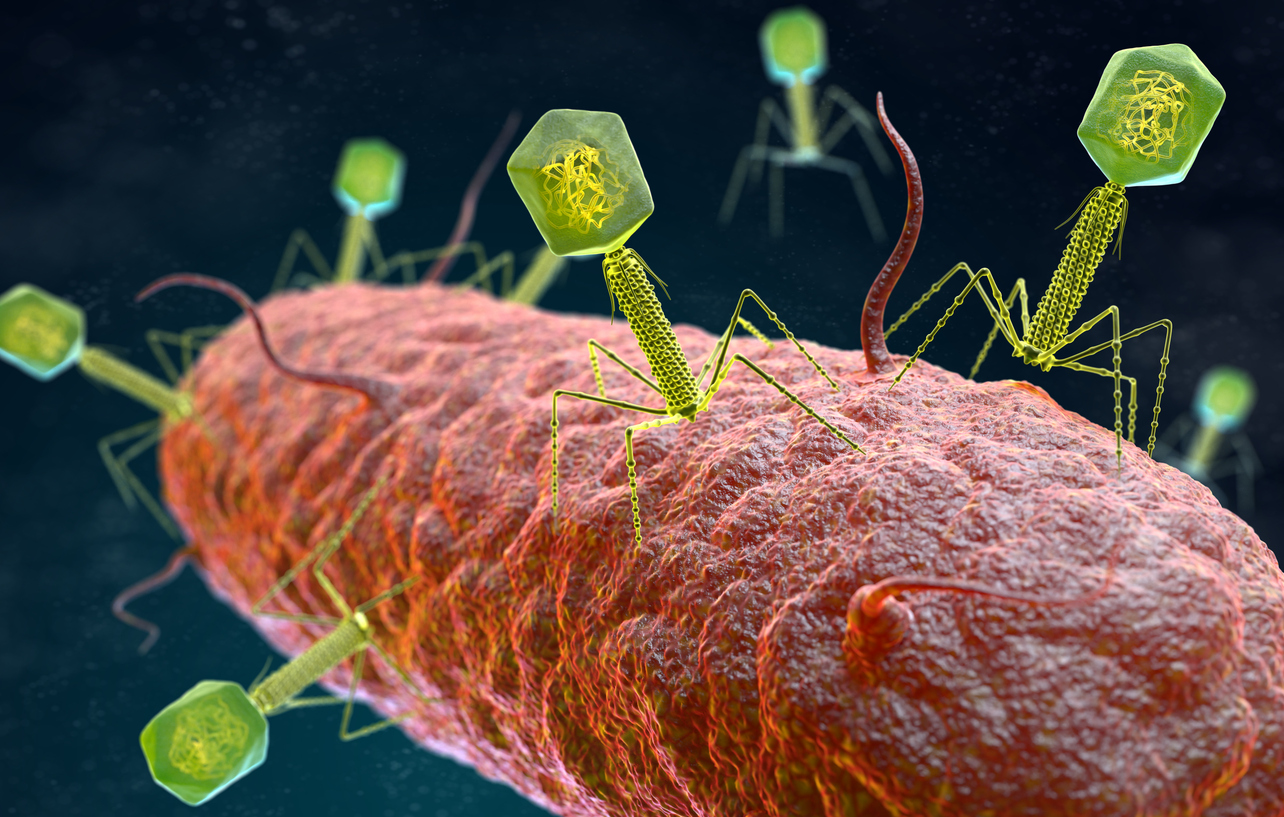
A study by the CSIC reveals for the first time that different species of bacteriophages —viruses that infect bacteria— share a “common language” to collectively decide whether to infect bacteria or integrate into their genome. Diffraction data from single protein crystals was collected at the XALOC beamline of the ALBA Synchrotron. The discovery of social behaviors among phages opens the door to a new field of research with implications for the development of novel therapies to combat bacterial infections.
An international team led from the Institute of Biomedicine of Valencia (IBV-CSIC) and Imperial College London, with the participation of CEU Cardenal Herrera University, has shown that the phages, or bacteriophages —viruses that infect bacteria— could develop social behaviors between species through small messenger molecules called peptides. The results, published in Cell, demonstrate for the first time that peptide communication is not limited to phages of the same lineage or species, but that it also works between different species, which allows viruses to coordinate fundamental decisions for their collective survival.
Although it was already known that simple organisms such as bacteria use communication systems, the discovery that viruses also do so is relatively recent, and until now it was assumed that they were only capable of responding to signals from their own species. The new work breaks this paradigm by demonstrating for the first time that phages can recognize and respond to peptide signals produced by unrelated viruses.
“The discovery of this phenomenon, called cross-talk or cross-communication, has allowed us to confirm that certain peptides bind with high affinity to unrelated phage receptors, activating or deactivating pathways that determine whether the virus will follow a lytic or lysogenic cycle,” explains Alberto Marina, researcher at IBV-CSIC who led the study and coordinates the CSIC Antimicrobial Resistance Connection.
The concepts of lysis and lysogeny describe the two strategies bacteriophages use to infect bacteria. In the lytic cycle, after infecting the bacteria, the phages multiply rapidly until they destroy the infected cell. In the lysogenic cycle, the viral genome integrates into the bacterium without damaging it, remaining dormant for generations. Viruses in a lysogenic state can receive an activating signal and enter the lytic cycle, destroying the host cell in a process known as induction.
The research team has observed in mixed cultures —laboratory tests where different types of viruses coexist in the same environment— how the common language shared by phages modifies the dynamics of lysogeny and induction. Therefore, the cross-communication discovered in this work represents an essential tool in the decisions that phages make collectively to ensure their survival.
The study also demonstrates that cross-communication can develop between bacteriophages that infect different bacterial species, which has significant implications for understanding how microbial communities function. In other words, the language shared by viruses is so universal that it allows a 'phage A' to communicate with a 'phage B' to coordinate infection strategies, even if each infects a different bacterium.
"The structural data reveal that minimal changes, such as a single mutation in a peptide, can activate or block communication, generating different dialects of this language that only a group of phages understands. This suggests a very fine evolutionary mechanism to modulate these interactions," explains Francisca Gallego del Sol, researcher at IBV-CSIC and first author of the paper.
To decipher this language and to confirm that the different viruses communicate with each other, the team used a multidisciplinary approach. They used protein crystallography to determine its structure; made possible by X-rays from the ALBA Synchrotron, at the XALOC beamline. Biophysical analyses were also carried out at IBV-CSIC, along with experiments with genetically modified viruses in cell cultures carried out at Imperial College London and CEU Cardenal Herrera University. Thanks to this combination of methods, it has been possible to understand how this communication works, from the atomic level to its possible consequences in the ecosystem.
The discovery represents a genuine paradigm shift by demonstrating that phages can communicate with viruses that are neither related nor belong to the same species. According to the authors, this ability opens the door to the study of social behavior among phages and suggests that viral communication in natural environments could play a much broader role than previously imagined. Furthermore, understanding how these viruses communicate can help generate tools that allow us to control bacterial communities by manipulating their shared molecular language.
The work, which provides a comprehensive view of the phenomenon through an approach that combines biochemistry, structural biology, genetics, microbial ecology and evolutionary modeling, represents the starting point on which the TalkingPhages project is based, funded by a selective Synergy Grant from the ERC (European Research Council).
Future applications of cross-communication
The authors emphasize that deciphering how phages communicate to infect bacteria will allow for the design of new and useful tools in therapeutic or biotechnological strategies through the interruption or modification of the language shared by these viruses.
“It can lead to the development of new antibacterial strategies through the manipulation of viral communication signals; or through the design of smart therapeutic phages capable of changing their behavior according to the signals present in an infection. Furthermore, it could be used to control industrial, environmental or clinical microbiomes through the modulation of communication between bacteria and phages, as well as to develop future biotechnological tools based on peptides capable of activating or silencing phage populations,” the researchers from IBV-CSIC explain.
In summary, the study reinforces our knowledge about the communication, behavior, and evolution of phages, which will allow us to better understand how microbial communities evolve, including their impact on pathogens and resistance to traditional antibiotics.