ALBA Synchrotron

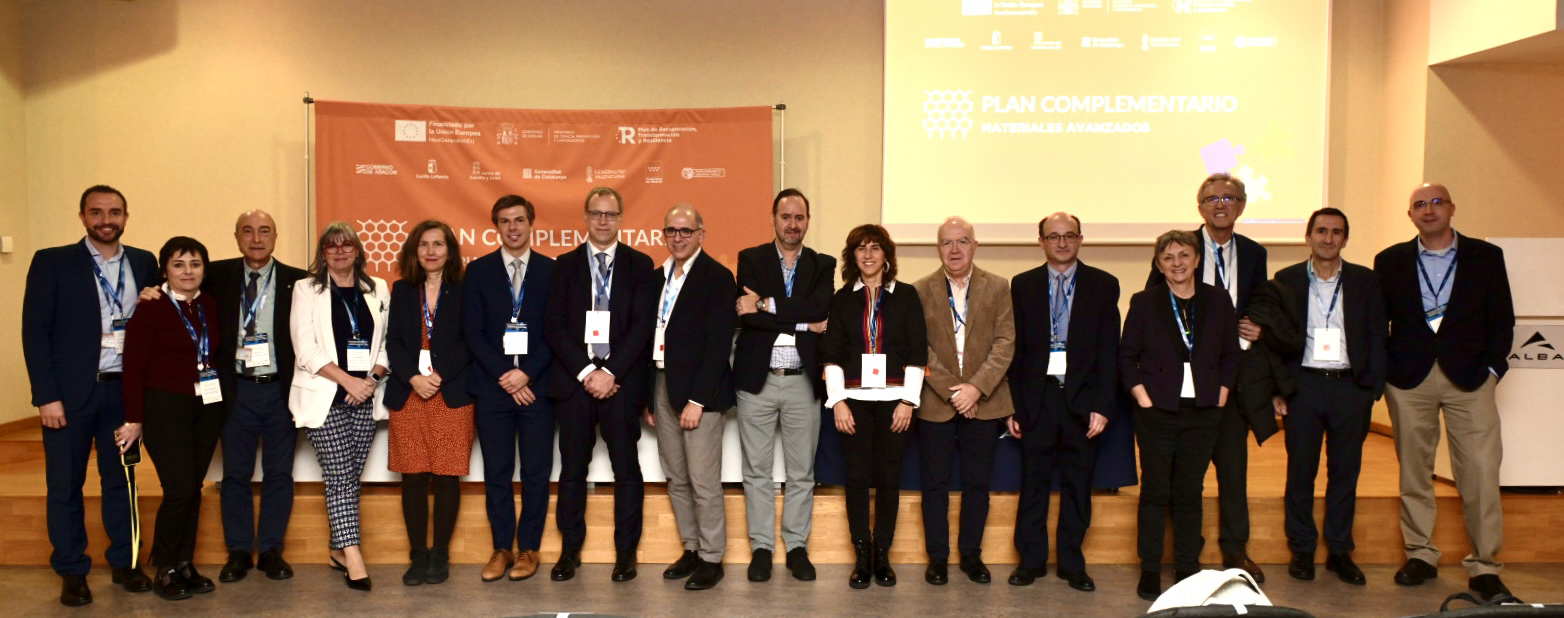
On the 24th of November 2025, as part of the closing of the Advanced Materials program of the Complementary Plans, this new scientific facility has been inaugurated.
InCAEM will be crucial to positioning Catalonia and Spain as key players in the development of materials and technologies that promote green energy and a sustainable economy.
The energy transition is a challenge that requires increasingly sustainable and efficient materials. Materials that help store more energy, that act as catalysts for chemical reactions to produce green fuels, or that reduce environmental impact, among others. To develop them, it is essential to have access to big research and technological infrastructures, that help observe materials at the atomic scale, and analyze how they transform, react and evolve in real time.
In this context, InCAEM (In situ Correlative Facility for Advanced Energy Materials) is born as a pioneering platform in Europe that will allow the scientific and industrial community to study materials under real operando conditions and with an unprecedented level of resolution and detail.
Innovation at the service of the energy transition
Open to the entire scientific and industrial communities and located in the ALBA Synchrotron, InCAEM has been created under the coordination of several leading research centers, such as the ALBA Synchrotron, the Catalan Institute of Nanoscience and Nanotechnology (ICN2), the Institute of Materials Science of Barcelona (ICMAB-CSIC) and the Scientific Information Port (PIC-IFAE).
InCAEM combines state-of-the-art microscopes, synchrotron light and advanced data processing capabilities, allowing the study of materials in action, under real operando conditions and from multiple techniques in a correlative manner. This integrative vision makes InCAEM a unique and unprecedented infrastructure in Europe.
The new platform will host up to 300 experiments per year with clear benefits for society: clean and sustainable energies (green hydrogen, batteries, solar panels, etc.), improvement of materials present in our daily lives such as screens, sensors or electronic devices or materials to capture pollutants or to purify water, among others.
With this new facility, the collaborating partners are taking a decisive step towards a new era in advanced materials research. According to Caterina Biscari, director of the ALBA Synchrotron and coordinator of InCAEM, this infrastructure will not only help drive scientific progress, but also reinforce the role of Catalonia and Spain as international benchmarks in the development of strategic technologies for the energy transition.
In the words of ICREA Professor Jordi Arbiol, leader of the Advanced Electronic Nanoscopy group at ICN2, and scientific coordinator of the project, “InCAEM will be a driver of innovation, attraction of talent and promotion of synergies between the scientific community and industry in the field of materials technology for the energy transition and the environment.”
According to Esther Barrena, researcher at ICMAB-CSIC and head of the scanning probe microscopy platform, “InCAEM offers an unprecedented opportunity to study advanced materials under real operating conditions and at the nanoscale. Our contribution focuses on analyzing materials and surfaces while they are in operation, providing essential information to understand their behavior in realistic environments and to advance the development of new energy and electronic solutions.”
"The ALBA Synchrotron and the PIC have integrated their high-performance computing systems to support the data analysis of the InCAEM project, which will manage a massive volume of information from the new microscopes, synchrotron beamlines and complex simulations" says Gonzalo Merino, director of PIC-IFAE.
A unique project of the Complementary Plans
The infrastructure has been funded through the Complementary Plans program, with the support of the Ministry of Science, Innovation and Universities, the Generalitat de Catalunya and the European funds NextGenerationEU, within the Advanced Materials project in Catalonia. Despite being an infrastructure open to the entire scientific community, Catalan institutions will have reserved time, always after a competitive evaluation process.
InCAEM has been inaugurated within the framework of the closing ceremony of the Advanced Materials Program of the Complementary Plans, hosted today by the ALBA Synchrotron. During this process, the different achievements obtained by the projects that make up this program were presented.
The ceremony was attended by the Director General for Research of the Generalitat of Catalonia, Teresa Sanchis, and the Deputy Director General for Large Scientific and Technical Facilities of the Ministry of Science, Innovation and Universities, José Ignacio Doncel, as well as other representatives from other Spanish regions. They all highlighted the great example of cooperation and coordination that this program has represented within and among the regions involved.