ALBA Synchrotron

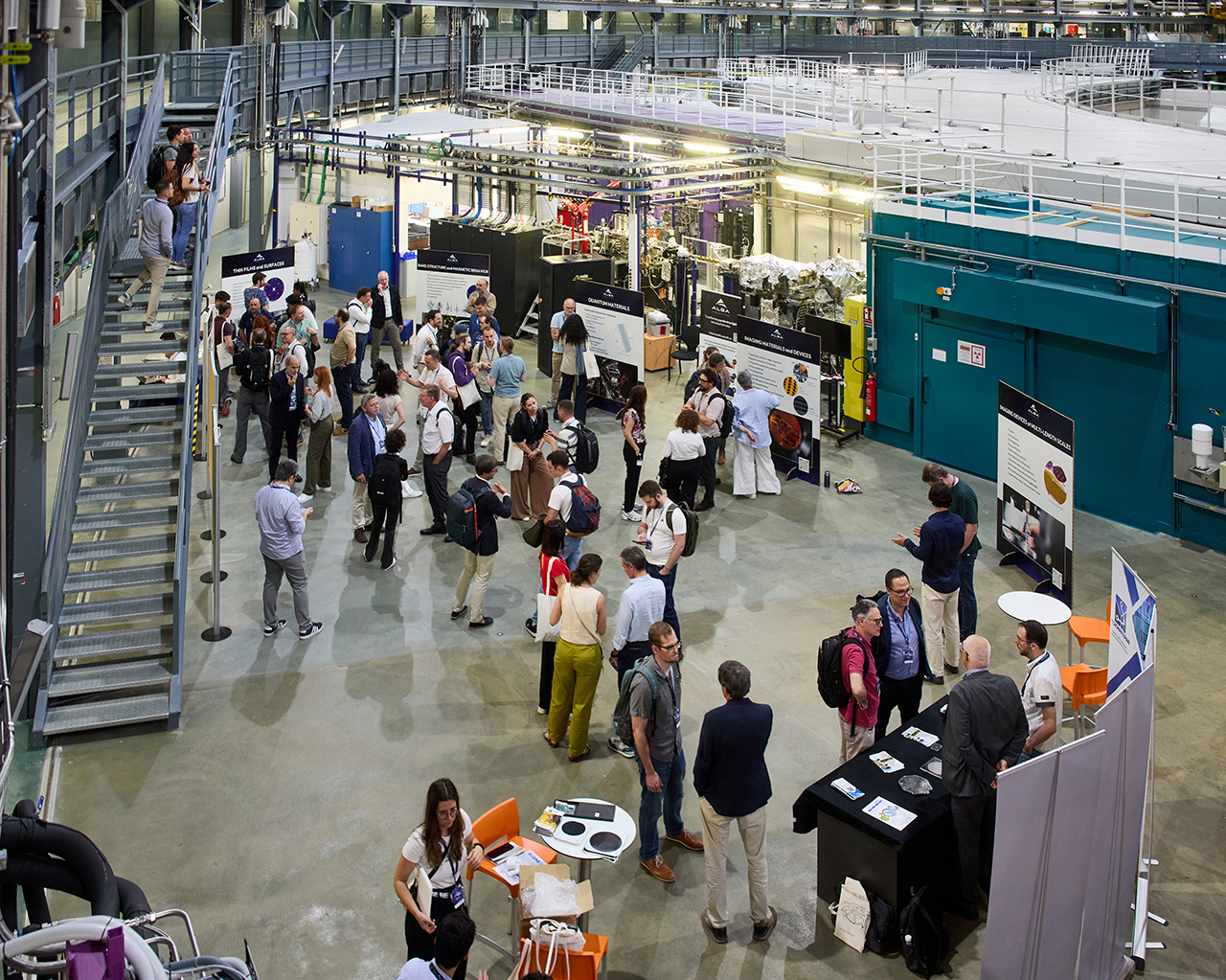
European companies, spin-offs, research institutions and technology centers gathered at the ALBA Synchrotron to explore how advanced characterization and manufacturing services are accelerating innovation in the semiconductors and quantum technologies sectors.
Once again, the ALBA Synchrotron hosted an industrial workshop aimed at strengthening connections with a strategic industrial sector and showcasing the competitive advantage that synchrotron-based research can bring to innovation. This year's edition focused on semiconductors, integrated circuits and quantum technologies, fields that are becoming increasingly important for Europe's competitiveness, technological sovereignty and economic growth.
The development of these technologies depends on the ability to manufacture and characterize structures at multi-length scales, from micrometer to nanometer and atomic scales, requiring access to state-of-the-art facilities and highly specialized expertise, such as those available at large-scale research infrastructures like ALBA.
Held on 11 June 2026, the workshop brought together more than 70 participants representing a wide variety of companies, technology centers, research institutions and innovation organizations mainly from Spain but also from across Europe. It was organised by the ALBA Synchrotron, imec, Institute of Microelectronics of Barcelona (IMB-CNM, CSIC) and INESC Microssistemas e Nanotecnologias. The event highlighted how collaboration between industry, research infrastructures and technology centers can help address key technological challenges and accelerate innovation from fundamental research to industrial deployment.
The workshop was opened by Caterina Biscari, Director of the ALBA Synchrotron, who welcomed participants and emphasized the importance of the collaboration between industry and research infrastructures.
"This workshop enables companies working in semiconductors to learn first-hand about the advanced scientific capabilities available at ALBA while creating a valuable space for collaboration between the public and private sectors", highlighted Caterina Biscari.
The program featured presentations covering key topics across the semiconductor value chain, including the use of synchrotron techniques in semiconductor R&D by Paul van der Heide (imec); quantum computing by Borja Aizpurua (Multiverse Computing); EUV optics and materials by Eric Pellegrin (Carl Zeiss Gmb); lithography and metrology challenges by Olivier Balmes (ASML), innovation models connecting research and manufacturing by José Garrido (ICN2 and InnoFab), and the contribution of research infrastructures to industrial competitiveness, presented by Bárbara Calisto (scientist at the ALBA Industrial Liaison Office).
A dedicated company pitch session allowed nine participating companies to present their activities and explore opportunities for future collaborations. The program also included a networking session in an exhibition area, counting with the participation of the Institute of Microelectronics of Barcelona (IMB-CNM-CSIC) and fostering exchanges between participants and encouraging new partnerships.
Before ending, participants could have the possibility to visit ALBA's facilities and discover first-hand the available scientific instruments to potentiate their research.
"The workshop created an extraordinary space for dialogue between industry and research infrastructures. These interactions strengthened connections across the European semiconductor and quantm technologies ecosystem and showcased the role of large-scale research facilities in advancing next-generation electronic and quantum devices" said Alejandro Sánchez, Head of the Industrial Liaison Office at ALBA Synchrotron, who moderated the event.