ALBA Synchrotron

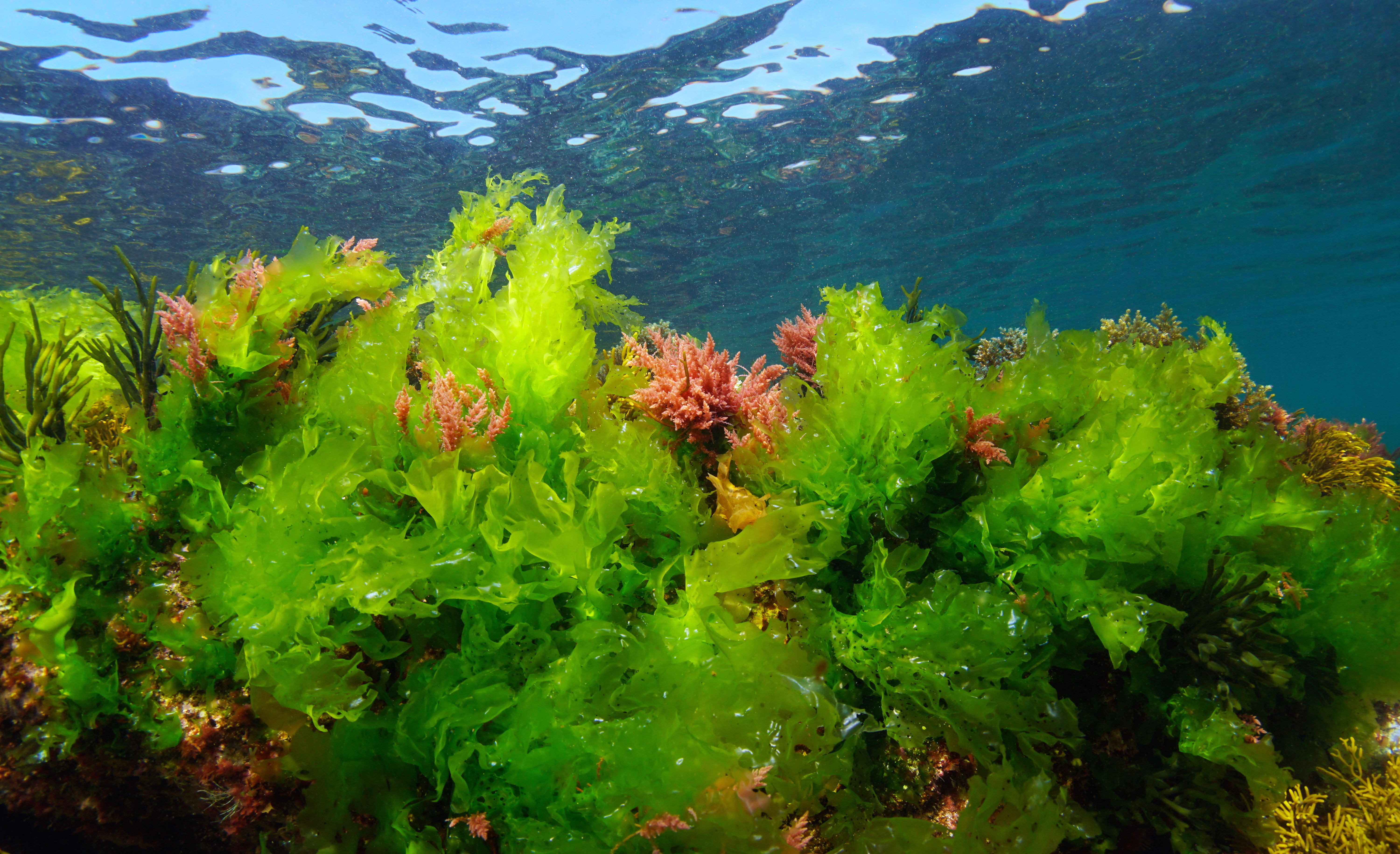
Researchers from the Food Science Research Institute (CIAL, CSIC-UAM), in collaboration with the ALBA Synchrotron, have characterized the composition and nanoscale architecture of the cell walls of two edible seaweeds: Ulva lacinulata (sea lettuce) and Porphyra dioica (nori). By combining different techniques, including Small-Angle X-ray Scattering (SAXS) at the ALBA synchrotron, they revealed how their molecular organization dictates how nutrients are stored and released.
Seaweeds are gaining attention as a sustainable food source, especially as demand grows for alternatives to animal protein. They are rich in nutrients such as essential amino acids, polyunsaturated fatty acids, vitamins, and minerals. However, accessing these nutrients remains a challenge, as they are trapped inside complex cell walls, making them harder for our bodies to absorb.
Understanding the nanostructure of these barriers and how it influences their mechanical properties is essential for designing food processing strategies that facilitate the release of these compounds for human nutrition.
Unlike previous studies that used harsh chemical treatments and damaged these structures, the team from CIAL developed a gentler method —adapted from a technique previously used for land plants— to remove the cell’s internal contents while keeping the cell walls largely unchanged. This work, carried out as part of the ERC Consolidator project PRODIGEST and recently published in the journal Food Hydrocolloids, allowed researchers to study the seaweed cell walls in a state much closer to how they exist in nature.
The researchers then tested how common food processing methods—such as steam cooking and the high-frequency sound waves (ultrasonication)—affect the composition and multiscale structure of two seaweed species: Ulva lacinulata (sea lettuce) and Porphyra dioica (nori). They measured protein, lipid, and ash content, as well as the carbohydrate profile of the samples, and assessed the structural integrity of the cell walls before and after mechanical (ultrasonication) and thermal (steam cooking) treatments.
Small-Angle X-ray Scattering (SAXS) experiments at the NCD-SWEET beamline of the ALBA Synchrotron were instrumental in understanding how different components were spatially organized and interact within the native cell walls, and how that organization changed after processing.
By integrating these techniques, the researchers found key differences in the nanostructure of the two seaweed species and in their responses to processing. Ulva lacinulata cell walls contain cellulose as the main structural component. This crystalline structure was largely preserved during steam cooking but was heavily disrupted by ultrasound treatment, causing significant cell wall breakdown and the release of proteins and polysaccharides. In contrast, the main backbone component of Porphyra dioica cell walls consists of semi-crystalline porphyrans, which proved far more resilient to ultrasound. In this species, steam cooking promoted protein release and the migration of some polysaccharides into the extracellular matrix, while ultrasound altered the crystalline structure of porphyrans but preserved cellular integrity due to the dense, gel-like extracellular matrix.
Overall, from a nutritional perspective, ultrasound treatment appears more effective for Ulva lacinulata, as it increases cell wall breakdown and nutrient release, whereas steam cooking is better suited for Porphyra dioica, promoting access to nutrients without compromising its structural integrity.
This work is among the few to resolve the native nanoscale organization of macroalgal cell walls. By leveraging the high-resolution X-ray scattering measurements at the ALBA Synchrotron, the study establishes a clear connection between the physical “scaffolding” of seaweed and its nutritional accessibility, offering valuable insights for the food industry.

(Up) SAXS Kratky plots from seaweeds’ concentrated cell walls, before and after being subjected to steam and US treatments. (Left) Ulva, (Right) Nori. Arrows point towards structural features. (Down) The monosaccharide profile of the seaweeds’ concentrated cell walls before and after being subjected to steam and US treatments.