ALBA Synchrotron

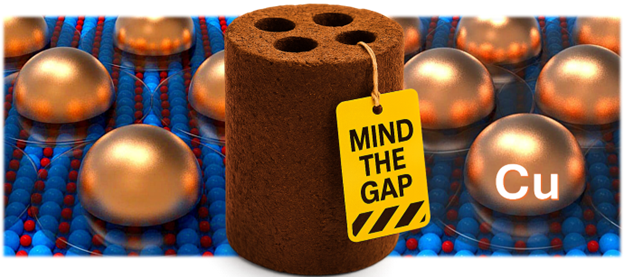
A new international study by researchers from the Institute of Chemical Technology (ITQ, CSIC-UPV) and the ALBA Synchrotron, as well as other European partners, has revealed that fine-tuning the distance between copper nanoparticles on a zirconia-based catalyst dramatically improves the conversion of waste carbon dioxide into methanol. Using high-brightness synchrotron X-rays at ALBA’s NOTOS beamline, the team uncovered the impact of spacing between nanoparticles on catalytic performance, opening new routes to more efficient and sustainable chemical processes.
Transforming carbon dioxide into valuable fuels and chemicals is one of the biggest challenges in sustainable chemistry today. Although there are various routes, the hydrogenation of carbon dioxide into methanol – a key industrial molecule that can serve as a renewable fuel – has attracted special attention.
Copper supported on metal oxides such as zirconia is a commonly used catalyst in these reactions. For years, researchers have known that the size and composition of copper nanoparticles play a crucial role in determining how well catalysts perform. However, in this new study, published in Angewandte Chemie International Edition, researchers discovered that the distance between nanoparticles can significantly influence how quickly and efficiently carbon dioxide turns into methanol.
The team prepared a series of copper-on-zirconia catalysts with nearly identical particle size but with varied spacing between nanoparticles. When they compared the performance of the catalysts under industrially relevant conditions, they found that methanol production rates followed a “volcano” pattern – whereby they peaked sharply when the average surface-to-surface distance between copper particles was about 15 nanometers.
At this optimal spacing, the catalysts also achieved the lowest activation energy, meaning the reaction occurred more efficiently with less input energy. When the particles were either too close or too far apart, the catalytic activity dropped significantly.
Operando infrared spectroscopy confirmed why: at the perfect distance, the right balance emerged between reactive and spectator species on the catalyst surface. Formate intermediates – key molecules in the methanol synthesis pathway – were dynamically formed and converted at just the right rate.
At ALBA’s NOTOS beamline, researchers used X-ray absorption spectroscopy (XAS) to probe the catalysts under real working conditions similar to industrial methanol synthesis. These operando measurements allowed the team to confirm that all samples had virtually identical nanoparticle sizes, allowing them to isolate spacing as the only variable. The high intensity and tunability of ALBA’s X-rays made it possible to quantify these structural parameters with exceptional accuracy, something impossible to achieve with standard lab-based techniques.
The benchtop facilities applied for this research have been developed by the ITQ researchers, in cooperation with ALBA’s Experiments Division, as part of the CSIC-ALBA bilateral collaboration within CSIC’s Interdisciplinary Thematic Platform (PTI+) Sustainable Energy Transition (PTI-TransEner+), supported by the Spanish Ministry of Science and Innovation (MCIN) with funding from the European Union – NextGenerationEU (PRTR).
This collaboration was led by researchers from the ITQ Institute for Chemical Technology (CSIC-UPV) and, next to researchers at the NOTOS beamline of ALBA, it also involved scientists from the METCAM microscopy platform at ALBA and the Institut Català de Nanociència i Nanotecnologia (ICN2), Elettra Sincrotrone Trieste (Italy), ZHAW Zurich University of Applied Sciences (Switzerland), and the Centre for Electrochemistry and Surface Technology (Austria).
This research offers a new blueprint for designing catalysts that transform waste carbon dioxide into valuable products more efficiently. As the world moves toward greener energy systems, understanding how matter behaves at the atomic scale will continue to be a crucial step toward sustainable chemical innovation.