ALBA Synchrotron

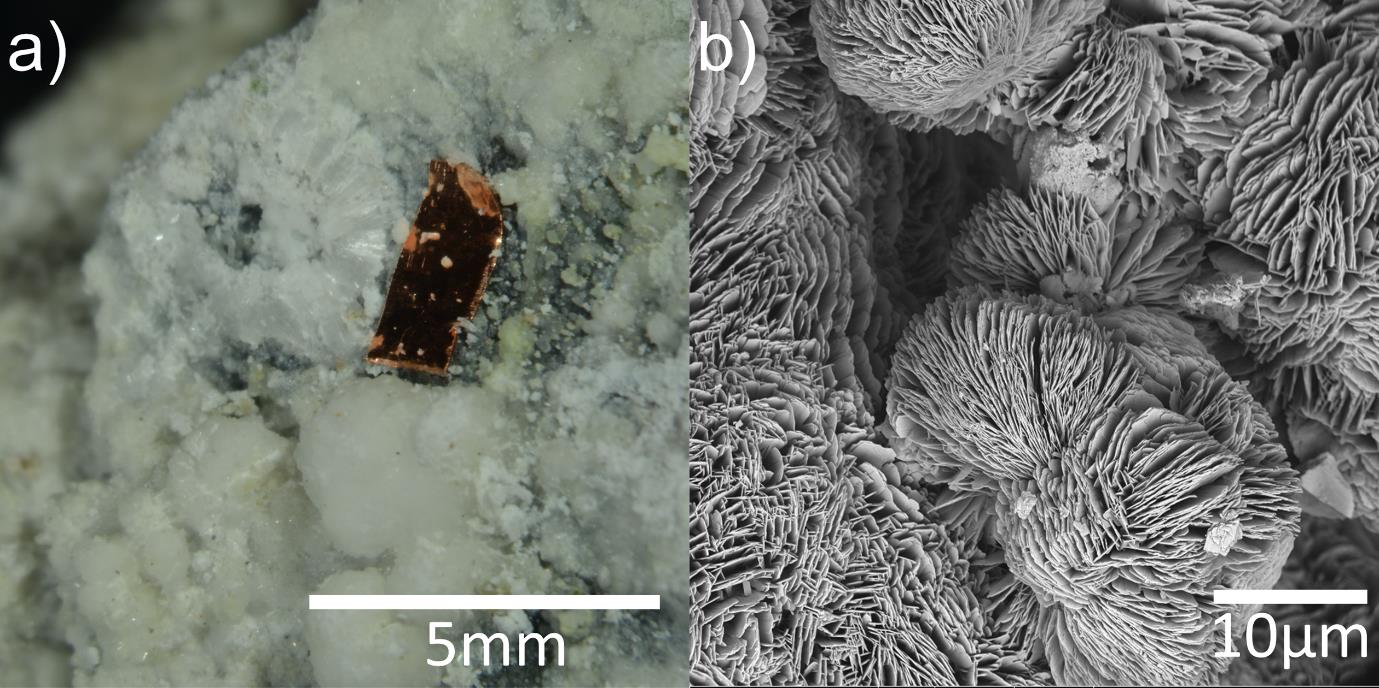
A team of researchers from the University of Oslo and the ALBA Synchrotron has determined for the first time the crystal structure of dypingite, a naturally occurring hydrated magnesium carbonate mineral. Using synchrotron X-ray diffraction at ALBA, the scientists revealed how humidity triggers subtle but reversible disorder in the mineral’s structure. These findings, published in the Journal of Applied Crystallography, help explain the elusive nature of dypingite’s atomic arrangement and could improve our understanding of carbon mineralization – a natural process with implications for carbon dioxide capture and storage.
Understanding the structure of crystals and their defects has led to a number of surprising innovations across various fields, from modern electronics and computing to high-precision MRI machines and large high-energy accelerators. In light of this, researchers have been studying a number of disordered solid materials and exploring methods to engineer disorder within their crystal structures to gain control over the physical and chemical properties of the compounds. One mineral of growing interest is dypingite, a naturally-occurring hydrated magnesium carbonate mineral that forms through the reaction of magnesium-rich rocks with carbon dioxide and water.
These minerals have been found to play a role in natural carbon sequestration, whereby they lock atmospheric carbon dioxide into stable solid forms over geological timescales. Furthermore, dypingite forms flower-like nanoparticles that could have applications in catalysis and water filtration. Identifying their crystal structure could enable scientists to exploit these properties. Dypingite was first described in the 70's. However, until now, it has been notoriously difficult to characterize due to its complex layering and sensitivity to moisture.
This new study closes a more than five-decade gap in our understanding of its crystal structure and provides a breakthrough in understanding dypingite. The researchers combined powder X-ray diffraction at the MSPD beamline (Materials Science and Powder Diffraction) and the Swiss–Norwegian Beamline (SNBL, ESRF) with transmission electron microscopy and carefully controlled humidity experiments, in order to uncover a structure composed of alternating magnesium-carbonate layers interspersed with water molecules. Remarkably, the researchers observed that the degree of structural order changes depending on the surrounding humidity. At higher humidity, water molecules rearrange within the lattice, introducing a form of long-range disorder – meaning that the overall pattern of atomic positions becomes irregular, even though local bonding remains stable.
This finding is a rare example of environmentally tunable structural disorder, where changes in ambient conditions modify the internal architecture of a solid material without breaking it down.
Such insights have broader implications. Understanding how hydrated carbonates respond to environmental humidity can inform the design of functional materials that exploit similar mechanisms – for example, in humidity sensors or tunable porous materials. It also deepens our understanding of how magnesium carbonates form and transform in natural settings, influencing the long-term carbon cycle and carbon storage in rocks.
Through these analyses, the researchers were able to construct a complete atomic model of dypingite for the first time. The study shows how synchrotron light sources like ALBA are essential tools for investigating complex natural materials – especially those whose properties depend sensitively on their environment. In addition, it opens new avenues for exploring the impact of water on disorder and structure in both natural and synthetic systems.