ALBA Synchrotron

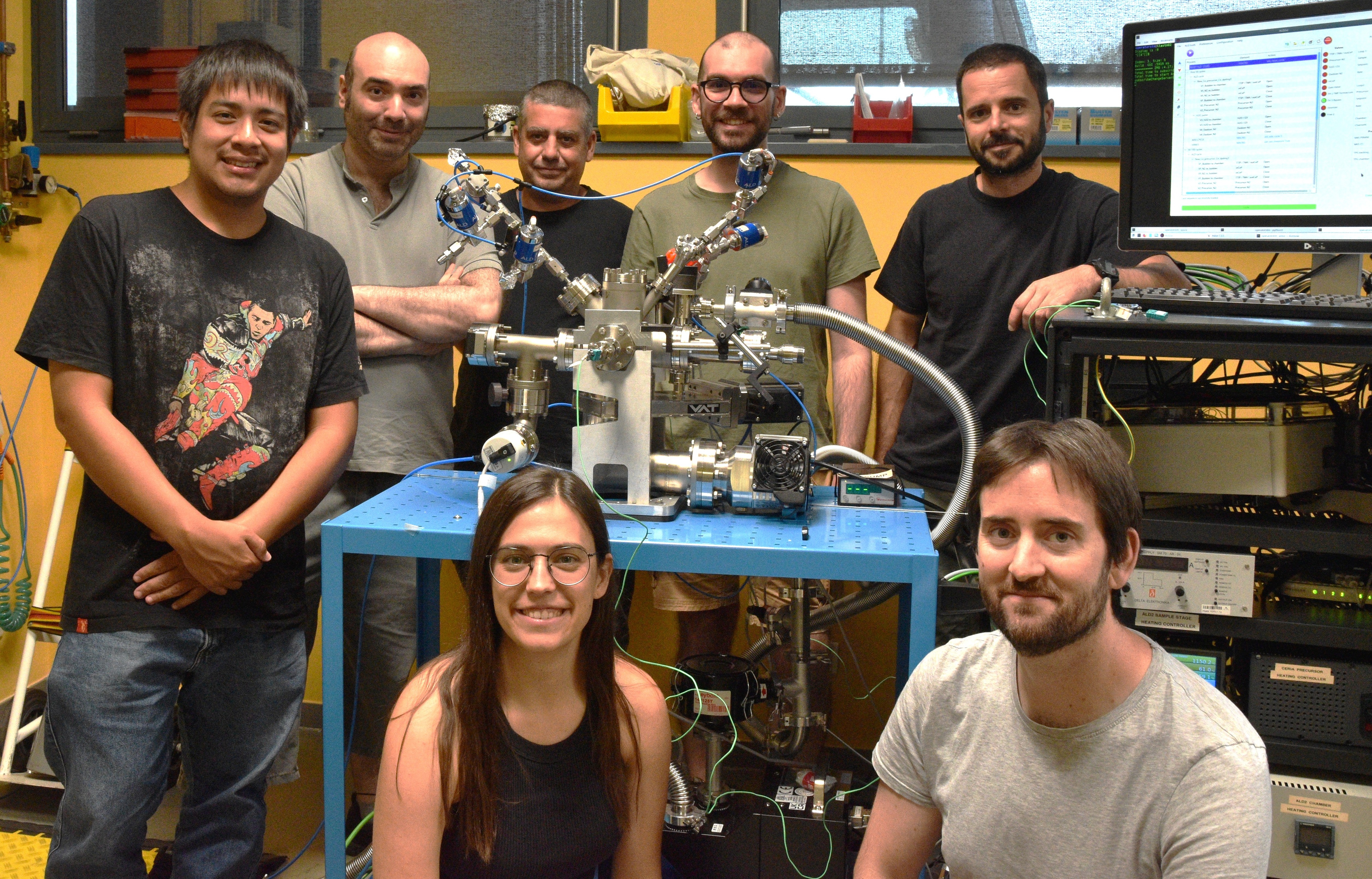
Scientists at the ALBA Synchrotron have developed ALD2, a custom-built reactor that enables real-time monitoring of Atomic Layer Deposition (ALD) processes directly inside two of the facility’s beamlines: NCD-SWEET and NOTOS. The system represents a significant step forward in the in situ study of nanomaterial growth, combining two powerful and complementary X-ray techniques in a single, versatile instrument.
Watching materials grow, at real time
ALD (atomic layer deposition) is a technique widely used in semiconductor manufacturing, solar cells, and nanotechnology to deposit ultra-thin, highly uniform films of material with atomic-level precision. Understanding exactly how these films grow, cycle by cycle, is key to improving both the materials and the processes used to make them. Until now, most characterization was done after deposition, missing the critical dynamics that occur during growth.
The ALD2 reactor changes this. By integrating directly with ALBA's synchrotron X-ray beamlines, it allows researchers to observe structural and chemical changes in real time, while deposition is taking place.
A single reactor, two beamlines, two complementary techniques
The reactor has been designed to operate at two ALBA beamlines: NCD-SWEET and NOTOS. At NCD-SWEET, it enables Grazing Incidence Small Angle X-ray Scattering (GISAXS) measurements, providing information on film morphology, roughness, porosity, and thickness evolution at the nanoscale. At NOTOS, it allows X-ray Absorption Spectroscopy (XAS) experiments, probing the oxidation state and local atomic environment of the deposited material.
A modular design allows the same reactor body to be used in both configurations. This versatility, combined with a compact UHV-compatible stainless-steel chamber, custom heating assembly, and a fully automated control system integrated with ALBA's Tango/Sardana infrastructure, makes ALD2 a uniquely flexible tool for the community.
The reactor's performance was demonstrated through in situ deposition of titanium dioxide (TiO₂) thin films on silicon substrates, a deliberately demanding test case, given TiO₂'s low growth rate per ALD cycle. Despite the challenging conditions, including parasitic fluorescence from titanium components in the reactor itself, the team successfully acquired high-quality GISAXS and XANES data throughout the full deposition sequence of up to 1000 ALD cycles.
Beyond its role as an in-house research tool, ALD2 has already demonstrated its potential as a tool for friendly users. Researchers from the Centro Nacional de Microelectrónica (CNM-CSIC), led by Marta Fernández-Regúlez, have used the reactor to perform Sequential Infiltration Synthesis combined with Block Copolymer (SIS-BCP) processes, with results that are expected to be published soon.
The development of ALD2 is the result of a multidisciplinary effort within ALBA Synchrotron, bringing together scientists, technicians and engineers from different beamlines and divisions. The project has received funding from Ministerio de Economía, Comercio y Empresa (MINECO).


Top: ALD2 instrumentation integrated at the NOTOS beamline. Bottom: left, sample for ALD studies; right, ALD2 integrated at the NCD-SWEET beamline.