ALBA Synchrotron

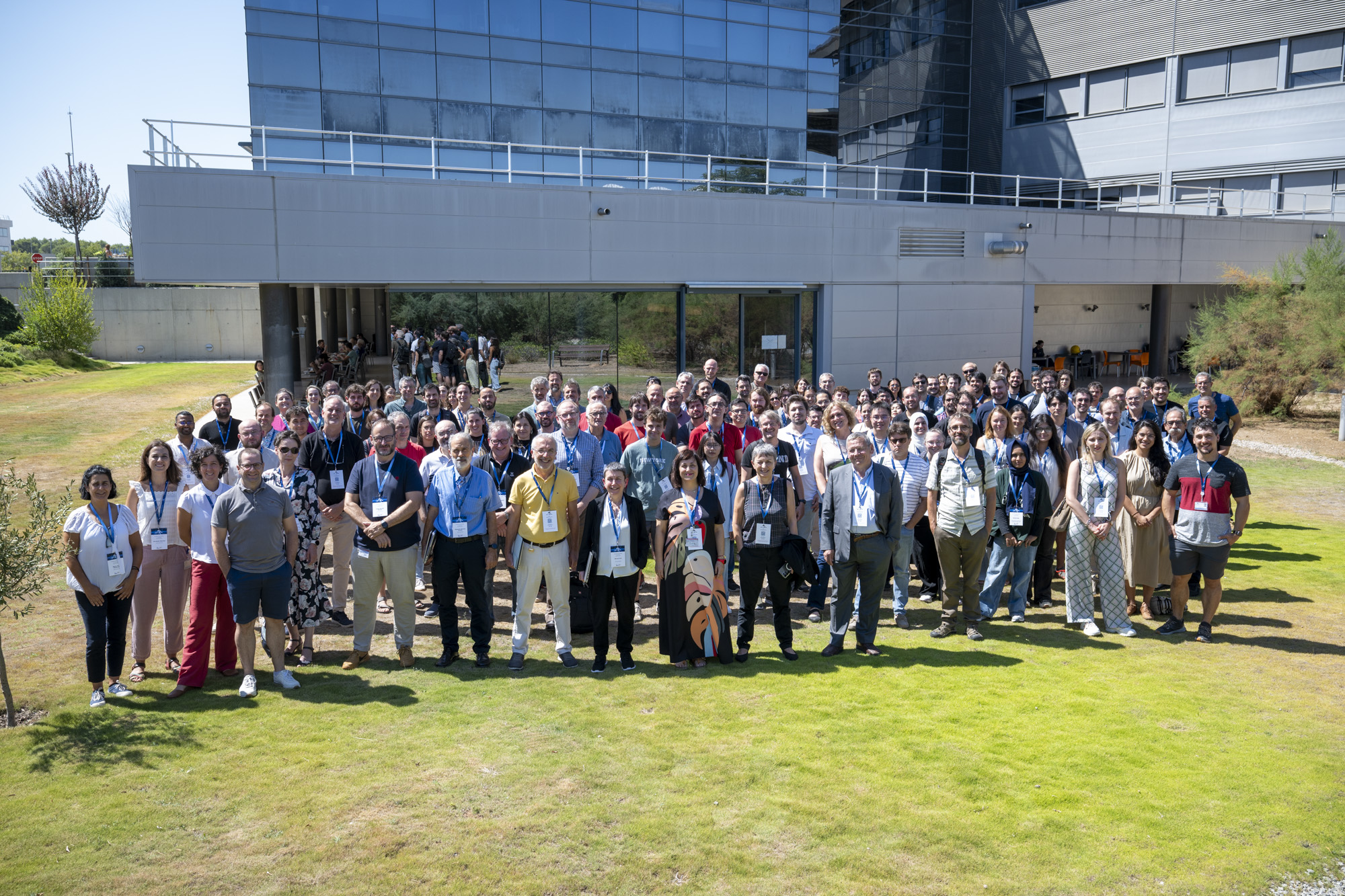
More than 120 participants gathered at ALBA on 3 and 4 September for two-days of networking, planning the facility’s future services and scientific exchange. ALBA's latest instruments, tools and policies, specifically the new data policy, available to users and the new scientific opportunities, coming with the ALBA II project, were discussed with users who, in turn, showcased some of the outstanding results obtained at the facility.
The VII ALBA Users' Meeting brought together the ALBA user community and ALBA staff at a particularly crucial moment of the facility. Following the formal approval of ALBA II in 2025, the meeting provided an update on the different aspects of the upgrade, including new instruments, methodologies and collaboration models being developed at ALBA. An important focus of the meeting were the corresponding new capabilities to address increasingly complex science on relevant time scales, often consistent with becoming part of the innovation ecosystem, as well as the different aspects of including the community in this exciting endeavour.
The two-day programme combined presentations on ALBA's present and future capabilities, scientific contributions from users, invited talks by international experts, the early career award laudation and the winners talk, as well as a roundtable with users, partners, policymakers, and an entrepreneur. The great atmosphere fostered lively discussions between the community and the facility staff developing perspectives for enhanced collaborative concepts, specifically strategic partnerships and its impact on the partner as well as the user community.
With 56 posters presented and 3 thematic scientific parallel sessions, the meeting also showcased the breadth and quality of the research currently performed by the ALBA community.
From ALBA to ALBA II
The meeting opened with a session chaired by Inés Muñoz, president of the Spanish Synchrotron User Association (AUSE) and CNIO researcher, looking at the evolution of ALBA and the opportunities ahead.
Caterina Biscari, director of ALBA, remarked the development of the facility and its user community since ALBA started operations and also looked towards the next chapter: ALBA II, the upgrade that is transforming ALBA into a fourth-generation synchrotron light source. She also transmitted to the users a message from the next director, Harry Westfahl Jr., who will join ALBA in November and is looking forward to shape its future with the community.
ALBA's scientific director, Klaus Attenkofer, focused on how science at ALBA is already evolving. New instruments and capabilities, together with multimodal, multiscale and correlative approaches and integrated workflows, are allowing researchers to combine complementary information and address more complex questions. He also highlighted the growing importance of partnerships that bring together expertise and infrastructures from different organisations.
Montse Pont, ALBA II technical director, presented the progress already achieved across the five programmes that structure the upgrade: experiments, accelerators, computing and data, infrastructure and implementation. Several technologies for the future accelerator are already being tested on the current machine, while prototypes of key components are being characterised. In parallel, the new long beamlines and the buildings that will host them are progressing through their design phase, with recruitment also underway.

Klaus Attenkofer, ALBA's scientific director, during his talk.

Caterina Biscari, ALBA director, at the end of her talk.
More pictures of the session at the end of the page
New capabilities already reaching users
The discussion on the afternoon of 3 September put the spotlight on ALBA's newest scientific instruments.
The InCAEM facility, an excellent example of a strategic partnership, was presented by Ana Arché. The new environment for correlative studies of advanced energy materials integrates complementary microscopy, X-ray techniques and computational resources to investigate materials under realistic in situ and operando conditions.
Caori Organista introduced the capabilities of the FaXToR beamline, the new fast tomography beamline serving a wide range of science. Its different imaging modalities and capacity for fast, multiscale three-dimensional characterization open opportunities across fields ranging from materials science and energy to life sciences, cultural heritage, geosciences and paleontology.
XAIRA, the microfocus macromolecular crystallography beamline, was presented by Damià Garriga, who showed the experience gained during its first year of user operation. Its microfocus beam, background reducing helium atmosphere with ultra-low sample temperature, and automated data-processing workflows are improving the possibilities for studying challenging samples.
Juan Jesús Velasco introduced 3Sbar, the new beamline dedicated to surface and interface characterization under realistic working conditions. Construction is now nearing completion, with the first users expected in 2026 and full operation in 2027.
As one of the meetings highlights, Aaron Bostwick, from the Advanced Light Source (ALS) at Lawrence Berkeley National Laboratory, complemented the session with an invited talk introducing nano angle-resolved photoemission spectroscopy (nARPES) and presenting research performed at the MAESTRO beamline of ALS.

Ana Arché during her talk presenting the InCAEM facility.

Caori Organista, beamline scientist at FaXToR.

Caori Organista, beamline scientist at FaXToR.

Ana Arché during her talk presenting the InCAEM facility.
Users, facility, partners and industry
The roundtable entitled "Collaborating for Impact: ALBA's Partnership Potential" elucidated the role and expectations of the different stakeholders as they contribute and form the innovation ecosystem. Specifically, the question how a facility can help the basic science community to become an impactful part of this ecosystem was focus; it illuminated the required services, the network role, access modes but also discussed avenues to create the necessary workforce or seemingly merging ALBA’s capabilities with partnering institutions like InnoFAB.
The discussion brought together Núria Montserrat, Catalan Minister for Research and Universities; Javier Selva, Director General for Technological Innovation and Scientific Internationalization; M. Rosa Palacín, ICMAB-CSIC researcher, member of ALBA's Scientific Advisory Committee, the PI of the Energy Transition Joint Laboratory and long-standing ALBA user; José Antonio Garrido, Vice-Director of ICN2, ICREA professor and principal investigator of InnoFab; and Caterina Biscari, director of ALBA.
Participants highlighted ALBA's fundamental role in enabling excellent basic research while acting increasingly as a catalyst for collaborations involving research institutions, technology infrastructures and companies. Initiatives such as the Energy Transition Joint Laboratory, InCAEM and the future InnoFab semiconductor facility illustrate the potential of building broader scientific and innovation ecosystems around ALBA.

Members participating at the roundtable "Collaborating for Impact: ALBA's Partnership Potential"

Consellera Núria Montserrat, regional Minister for Research and Universities at the Generalitat de Catalunya.
More pictures of the session at the end of the page
Recognising Caterina Biscari's leadership and dedication
Before concluding the first day with the poster session, an emotional note was tributed by the user community and ALBA staff to Caterina Biscari ahead of the end of her term as director of ALBA.
Núria Montserrat, Catalan Minister for Research and Universities, Ramon Pascual, on behalf of ALBA and Inés Muñoz, representing AUSE and the user community, recognised Biscari's leadership and dedication to the development of ALBA and its scientific community, stabilizing the young facilities operation, nurturing the extremely productive user program and leading into the future with securing ALBA II.

After the dedications, a plaque is presented to Caterina Biscari.

From left to right, Consellera Núria Montserrat, Caterina Biscari, Inés Muñoz and Ramon Pascual.
Preparing the beamlines and the data for ALBA II
The second day shifted the focus towards how the user experience itself will evolve.
Josep Nicolàs, from the Coordination Office at ALBA, presented the ALBA II Beamlines Upgrade Program. The upgrade offers an opportunity to renew instruments that have been operating for many years while taking advantage of major advances in detectors, optics, computing and accelerator technologies and constructing alongside five new beamlines: 3Sbar, MSPD2, CoDI, CORUS and CALIMA.
Data will be another fundamental component of this transformation. Óscar Matilla, head of the Computing division at ALBA, presented the work towards a new ALBA Data Policy, which will address the complete scientific data lifecycle and respond to new scientific requirements, regulatory frameworks and the challenge of ensuring the long-term sustainability of rapidly growing datasets.

Josep Nicolàs presenting the ALBA II beamlines upgrade program.

Óscar Matilla introducing the new ALBA Data Policy.
Supporting the next generation of users
The meeting also introduced the ALBA Early Career Distinction Award, created to recognise outstanding research performed by young scientists using ALBA’s instruments.
Followed by Caterina Biscari’s laudatio, the first award was presented to Maha Ismail, from CIC energiGUNE, who under the guidance of expert user Marine Reynaud from the same institution, focused her research on Fe-Mn battery cathodes within MAITENA, the Materials Acceleration and Innovation plaTform for ENergy Applications. Apart from presenting her research during the meeting, Maha Ismail will benefit from a beamtime at ALBA.

Maha Ismail, from CIC energiGUNE, winner of the first ALBA Early Career Award.

Caterina Biscari hands the winner certificate to Maha Ismail.
Science from users
The programme then continued in three parallel sessions dedicated to Electronic & Magnetic Structure of Matter, Life Sciences and Materials Science, combining invited speakers and contributions selected from the user community. The invited speakers, Gema Martínez-Criado (ESRF), Feliz Büttner (University of Augsburg), Elena Longo (Elettra Sincrotrone), Huayi Chen and Tobias Weinert (both from the Paul Scherrer Institute) shared their insights about how synchrotron science is currently evolving. Topics ranged from quantum and magnetic materials to batteries and catalysis, structural biology and advanced X-ray imaging, illustrating both the scientific diversity of ALBA users and the growing importance of combining complementary characterization methods.

Parallel session on life sciences, with invited speaker Elena Longo from Elettra Sincrotrone.

Invited speaker Gema Martínez-Criado from the European Synchrotron Radiation Facility.
The VII ALBA Users' Meeting highlights the opportunities for users, facility and policy maker which come with fostering the dialogue between the stakeholders as ALBA moves towards the next generation light source.
The next opportunity to come together will be on 21-23 June 2027 in Granada, for the XII AUSE Conference and VIII ALBA Users' Meeting.